
Simple Montessori-Inspired Play Ideas for Busy Mums (That Don’t Require Extra Time or Extra Stuff)
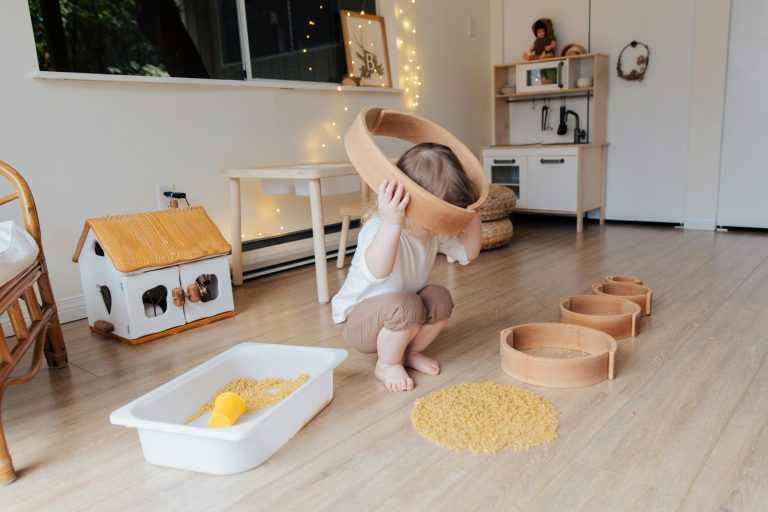
If you’ve ever looked at Montessori play ideas online and thought, “That’s lovely… but who has the time for that?”, you’re not alone.
Between school drop-offs, toddler tantrums, work, cooking, laundry, and the never-ending mental load of motherhood, the idea of setting up ‘beautiful activities’ every day can feel completely unrealistic. And honestly, it doesn’t have to be like that!
The good news is that Montessori-inspired play isn’t about fancy wooden shelves or perfectly curated toys. At its core, it’s simply about giving children the chance to explore, practise real-life skills, and play independently in a calm, purposeful way.
Below are some Montessori-inspired play ideas that are genuinely doable — even if you’re tired, busy, and just trying to get through the day.
What Montessori-Inspired Play Really Means (In Real Life)
Montessori play is often misunderstood as something structured, academic, or ‘only for certain families.’ In reality, it’s more of a mindset than a strict method.
At home, Montessori-inspired play usually looks like:
• Open-ended toys and materials (things that can be used in more than one way)
• Child-led exploration (your child chooses the activity and how long they stay with it)
• Simple, uncluttered spaces (less distraction, more focus)
• Practical life activities (children love copying real tasks — pouring, wiping, sorting, transferring)
It doesn’t mean your child needs to play quietly for hours, and it definitely doesn’t mean you need to buy expensive ‘Montessori’ products.
It simply means you’re setting up the environment so play feels calmer and more meaningful.
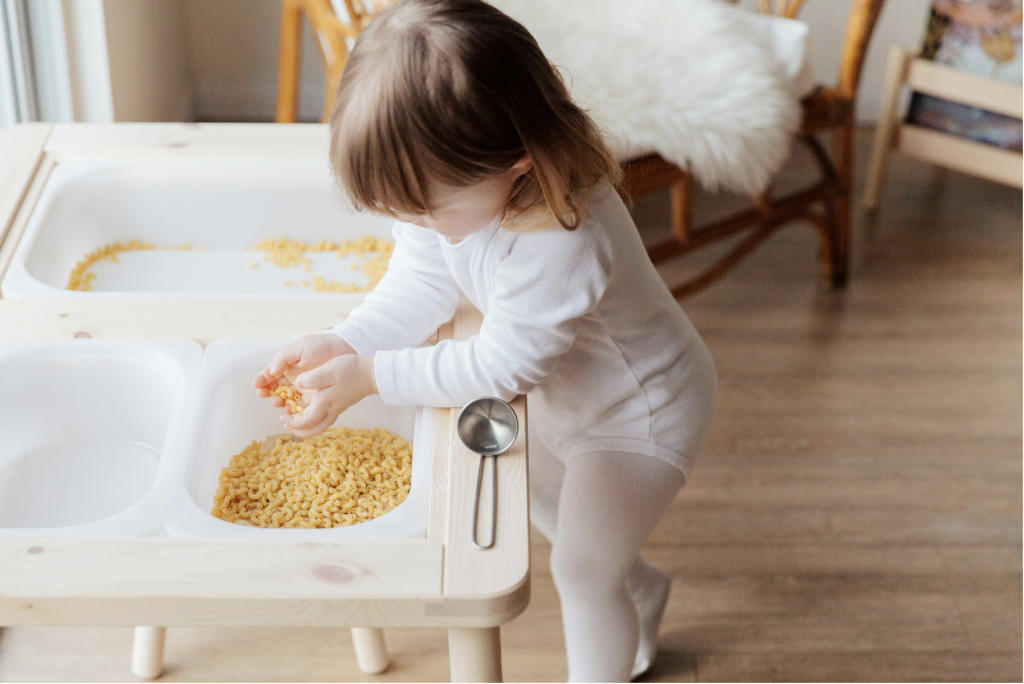
1. The ‘Practical Life Tray’ (5 Minutes to Set Up)
Practical life activity idea (supervised kitchen prep).
This is one of the easiest Montessori-style activities and it’s surprisingly effective.
Choose one small tray or basket and add a simple real-life task. For example:
• Pouring water from a small jug into cups
• Spoon transferring (dried rice or pasta from one bowl to another)
• Using tongs to move pom-poms or cotton balls
• Wiping a small table with a damp cloth
• Peeling a banana or mandarin (with supervision)
Kids love these tasks because they feel ‘grown up,’ and they build coordination, focus, and independence.
Busy mum tip: Keep the tray in a cupboard and pull it out when you need 10 minutes to make dinner or answer an email.
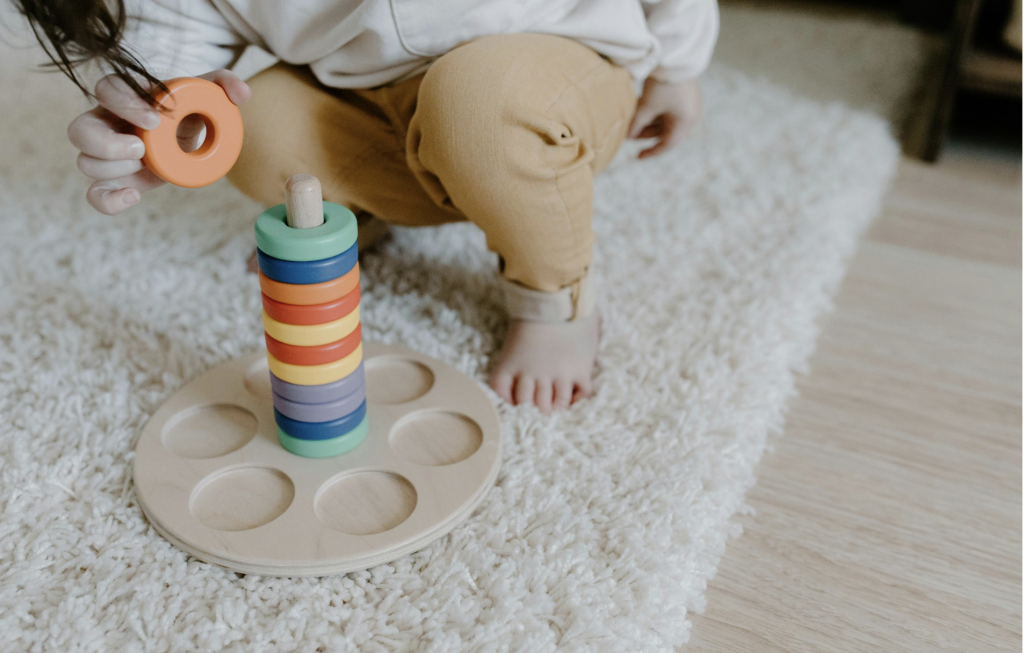
2. Toy Rotation (The Secret to Making Old Toys Feel New)
Toy rotation and simple stacking play.
If you’ve ever felt like your child has a million toys but is still bored, toy rotation might be your new best friend.
Instead of leaving everything out, put most toys away and keep only a few accessible. When kids have fewer choices, they often play longer and with more concentration.
A simple toy rotation could be:
• 1 puzzle
• 1 building toy
• 1 pretend play item
• 1 fine-motor activity
• 1 book basket
Then swap items every 1–2 weeks.
If your child suddenly becomes obsessed with something you haven’t seen in months, that’s your sign the rotation is working.
If you’d like inspiration for open-ended Montessori-style play resources (the kind that work well in rotations), here’s a helpful collection you can browse:
Montessori Toys Bundle
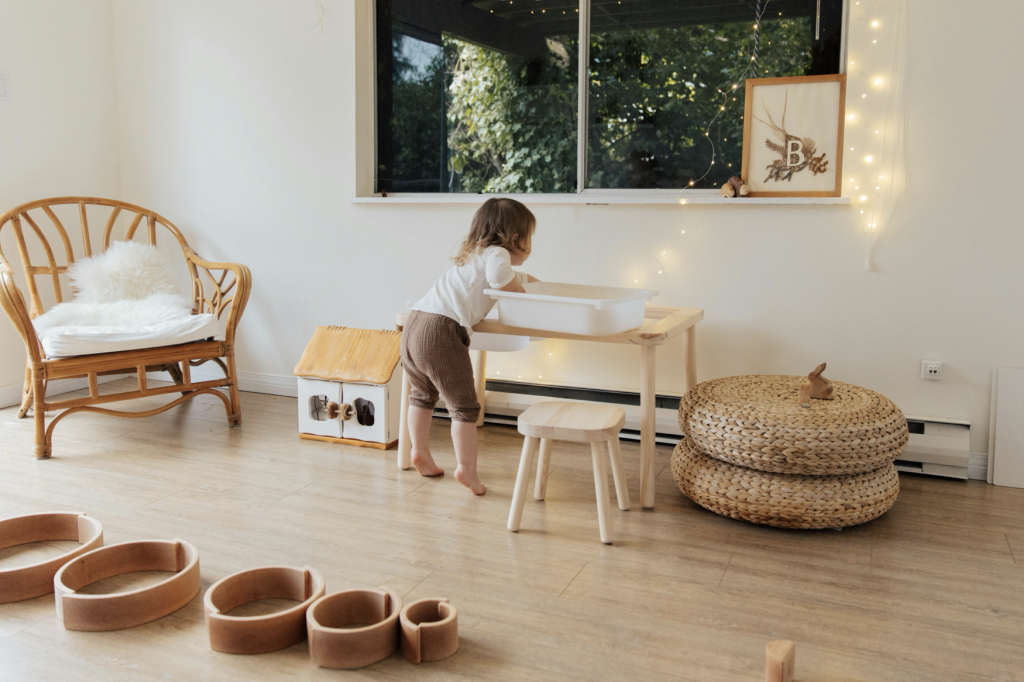
3. Create a ‘Yes Shelf’ (Low Effort, High Impact)
A calm, simple play setup.
One of the most Montessori-inspired things you can do at home is create a small shelf or basket where everything is safe and allowed.
This is often called a ‘yes space,’ because your child can explore without constantly hearing “no” or being redirected.
Keep it simple:
• 4–6 items max
• Nothing overstimulating (no loud toys, flashing lights, or too many pieces)
• Easy for little hands to pack away
You don’t need a Pinterest-worthy shelf. Even a low basket on the floor works.
This is especially helpful for toddlers, who thrive on independence but still need boundaries.

4. Kitchen Helper Activities (Because Kids Love What You’re Doing)
If you have a child who follows you everywhere, this one is for you.
Instead of trying to entertain them separately, invite them into what you’re already doing. It’s Montessori in action — real life, real skills.
Some easy kitchen tasks include:
• Washing fruit and vegetables
• Stirring pancake batter
• Sorting cutlery
• Matching lids to containers
• Pouring water into their own cup
• Wiping spills with a cloth
Yes, it can take longer at first — but over time, children become more capable and genuinely helpful.
And the best part? They feel included, which often reduces attention-seeking behaviour.
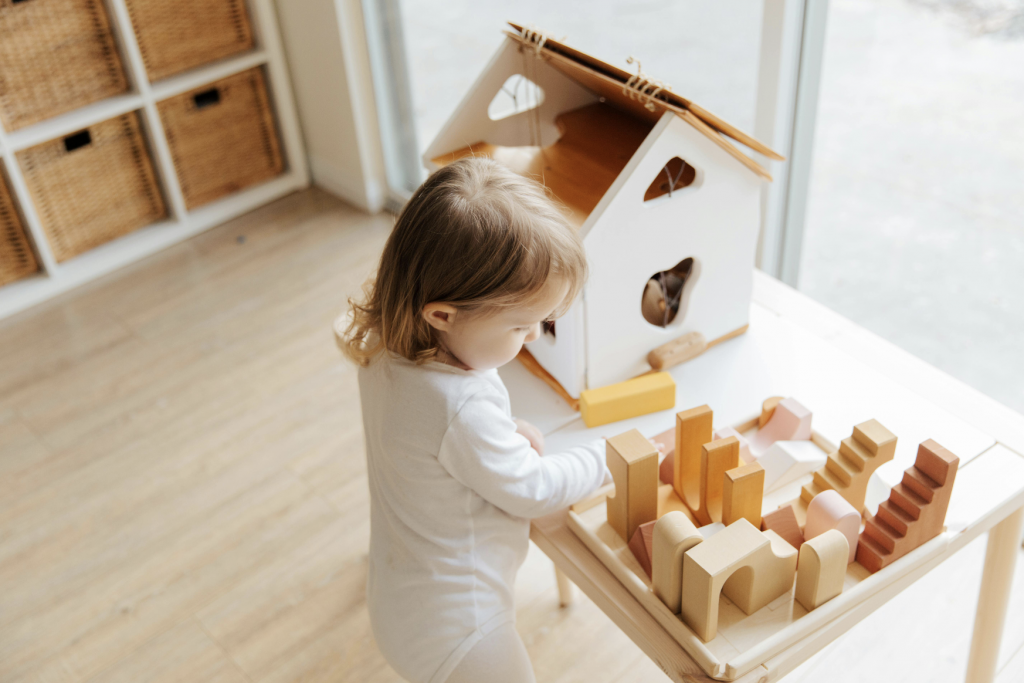
5. A Simple ‘Invitation to Play’ (No Craft Supplies Needed)
Invitation to play with simple materials.
Montessori-inspired play doesn’t need glitter, printables, or elaborate crafts.
Sometimes an invitation to play is as simple as setting up a small scene or offering a few materials in an organised way.
Ideas that work well:
• A basket of animals + a blanket for ‘habitat play’
• Blocks + cars for building ramps
• A few cups + a spoon + water play in the sink
• Crayons + a small notebook
• A bowl of buttons + containers for sorting (only if age-appropriate)
The trick is to keep it minimal.
Children don’t need more toys — they need fewer toys presented more thoughtfully.
If you’re building a play space with sustainable, child-safe items, you may also find it helpful to explore eco-friendly toy and furniture options designed to last: Kids Toys & Furniture
6. Reading as Montessori Play (Yes, It Counts)
Sometimes mums feel guilty when their child wants to sit with books instead of ‘doing activities.’ But reading is a valuable Montessori-style play.
A small book basket at your child’s level encourages:
• Language development
• Imagination
• Emotional connection
• Calm regulation
Try rotating books the same way you rotate toys. Even 10 minutes of reading can reset the mood of the whole day.
7. A Calm Clean-Up Routine (The Most Underrated Montessori Habit)
Montessori encourages children to care for their environment, and that includes cleaning up after play.
This doesn’t mean forcing them to tidy everything perfectly — it’s about building a habit and sense of responsibility.
Some easy ways to make clean-up manageable:
• Use baskets instead of complicated storage systems
• Label toy boxes with pictures
• Keep fewer toys out
• Do a ‘5-minute tidy’ together before lunch or bedtime
Children are more likely to clean up when the space is designed for them to succeed.
Final Thoughts: Montessori Doesn’t Have to Be Perfect
If there’s one thing to remember, it’s this:
Montessori-inspired play isn’t about creating a perfect home. It’s about creating a calmer rhythm for your child — and for you.
Start small.
Even one practical life tray or one toy rotation basket can make a noticeable difference. The goal is not to do everything ‘right,’ but to create an environment where your child can explore, focus, and grow with confidence.
And as busy mums, that’s really what we’re all trying to support.
Optional Further Reading
If you’d like a simple list of age-appropriate Montessori activity ideas (especially helpful for toddlers), this resource is a great starting point: Montessori activities at home with toddlers and preschoolers
 Divya is the founder of Bubs & Mums, an Australian online store specialising in eco-friendly, sustainable baby and kids products, Montessori-inspired toys, nursery essentials, and early learning resources. She is passionate about helping parents choose safer, high-quality products that support child development while being mindful of the environment.
Explore other popular topics: