AI Is Already in Your Kids’ Hands — What Parents Should Know About AI Safety

If you’ve ever caught your kid mid-homework with a chatbot open in another tab, you may wonder how much you actually know about what they’re doing with it. New research from TrendLife found that 92% of Australian parents believe their family is keeping pace with AI, or doing better than most. But only 42% actually review or talk to their kids about how they are using it. That’s a pretty big gap between feeling confident and actually knowing what’s going on when it comes to AI safety for kids.
The findings were unveiled this week at TrendLife’s ‘Families in the Age of AI’ event at Taronga Zoo in Sydney, where experts from the ACCC, UNICEF Australia and the education sector sat down to talk through what all this actually means for families. Jayde Richmond, General Manager of the ACCC’s National Anti-Scam Centre said “I think there’s a really big difference between confidence and immunity.” TrendLife’s Vice President of Consumer Education, Lynette Owens, made a similar point: AI has moved into family life faster than the conversations that should go with it.
How Young This is Starting
Three quarters of parents surveyed said their school-aged kids are already using tools like ChatGPT, Gemini or Claude, mostly for schoolwork and research. What might catch you off guard it how young this starts. More than half of parents with teenagers said their teens use AI regularly, but nearly a third of parents with kids aged five to twelve said the same. That’s a lot of primary schools-aged kids already chatting away to AI.
John Livingstone from UNICEF Australia raised a fair point too, saying young people themselves “see it as a double-edged sword,” caught between uncertainty about which careers will even exist and pressure from universities to already be highly skilled with AI. He also warned that families without the means, or whose schools don’t have an AI policy, risk being left behind. If governments and schools don’t step up with clearer guidance, the parents who can figure it out themselves will, and everyone else will be left scrambling.
AI Safety for Kids: What to Actually Check or Ask
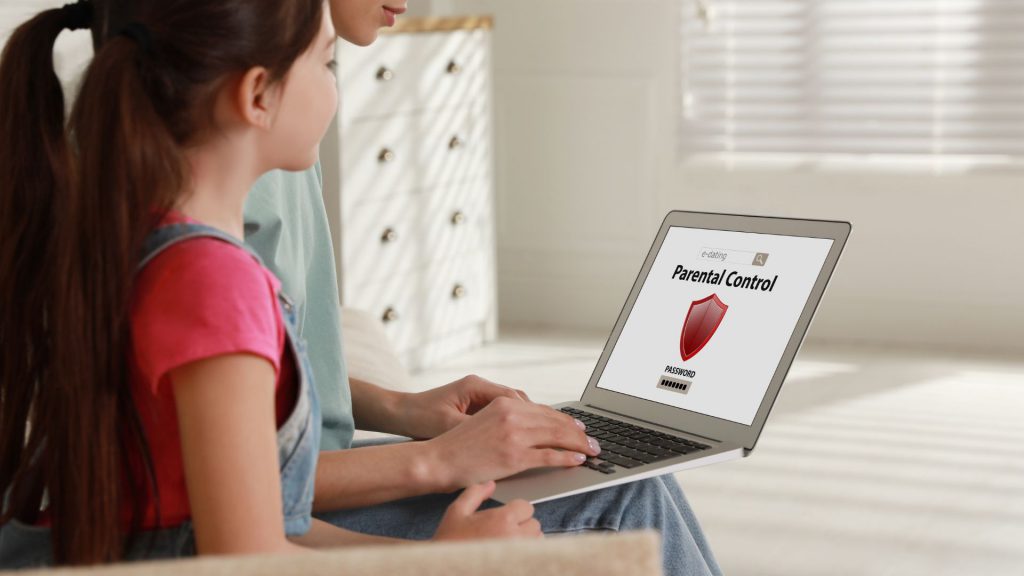
If you’re one of the many parents who haven’t really sat down and talked about this with your kids yet, the panel gave some solid, practical points rather than the usual vague “be more aware” advice. Jayde Richmond’s advice is to have the conversation, with your eight-year-old and your eighteen-year-old alike, set up a family safe word, and push businesses and governments to build safety into these tools instead of just chasing productivity. John Livingston’s advice was similar in spirit: set rules at home and model them yourself, use the parental controls that already exist on most platforms (which most of us never touch!), and keep the conversation going rather than having it once and calling it done.
The scam risk Richmond described is also worth knowing about. Remember when the “Hi Mum” scam was just a dodgy text message? Scammers can now pull your kid’s voice straight from videos posted online and use it to fake an emergency call, sometimes even a fake kidnapping, to pressure you into transferring money. “Your digital footprint, in a sense, can become a script for a scammer,” Richmond said. “There’s a scam for everyone.” Her advice is to agree on a family safe word now and talk through the what-if scenarios before you ever need them. She also reminded parent’s there’s no shame in getting caught out. “There’s nothing to be ashamed about, these are crimes.”
Learning vs Skipping the Thinking
Dr Beth Chapman had a clear answer when asked how parents can tell if their kid is using AI to learn something, or just to get the answer without doing any of the thinking. Her take was that adults can use these tools a bit more critically because we learned without them, we’ve already got the background knowledge to spot when something’s off. “Our children don’t have decades of experience, and they don’t have the content knowledge that we have,” she said.
She drew a pretty clear line between the two. “I think the humble essay has met its death in the age of AI,” she said. Asking AI to just “write me an essay on the domestication of rats” is one kind of use. Using it as a sounding board, telling it what you’re writing about, sharing your own ideas, asking what it thinks, is a completely different one. As she put it, “we focus too much on what AI can produce, and we forget that at its heart, it’s a conversational technology.” Her advice for parents is simple: look at the process, not just the finished product, and every so often, take the technology away altogether and see what happens.
The Five C’s Parents Can Use as a Guide
Chapman offered parents a simple framework for helping kids get the most out of AI without it taking over. She calls it the five Cs.
Curious
Curious means learning AI together as a family, rather than assuming your kid already knows more than you or that you need to catch up first. “No parent or carer needs to be more of an expert about AI than their child,” she said.
Creativity
Creativity is about using AI for fun, low-stakes things together, like making up stories. Chapman gave the example of prompting Gemini to write stories about the family pets.
Critical Thinking
Critical thinking means helping kids question the information AI gives them and where it actually comes from.
Care
Care is about protecting personal information, not uploading photos or personal details, since nothing shared with these tools can be guaranteed private.
Connection
Connection is about knowing when to put the technology down altogether. “Sometimes there’s no place for AI or technology of any kind,” Chapman said.

Privacy and Data
Almost six in ten parents surveyed said data privacy was one of their top concerns, and the panel backed that up with real examples. Between the scam risk described above and Chapman’s point on Care, the advice is fairly concrete: don’t upload your kids’ photos or personal details to AI tools, be mindful of what you post about them online more broadly since that’s exactly the material scammers use and have a look at whatever privacy settings the AI tools in your house actually offer rather than leaving everything on default.
Why This Isn’t One Conversation
A teenager using AI to draft an assignment is in a completely different position to a seven-year-old chatting to a voice assistant in the kitchen, and. how you handle oversight should reflect that. Livingstone made the point that there’s currently a huge burden sitting with Australian parents to manage all of this themselves. Until there’s clearer policy and guidance in place, the conversation at home is really what’s carrying the weight.
Quick Recap
- Actually ask what AI tools your kids are using and what for, rather than assuming it’s just homework help
- Set a family safe word and talk through what-if-scenarios in case of a scam
- Use the parental controls already built into these platforms, most people never touch them
- Ask to see your kid’s drafts and thinking, not just the finished product
- Don’t upload photos or personal details to AI tools
- Sit with your kids while they use AI rather than leaving them to it alone

Where to Start
AI storyteller and podcast host, Georgie Healy, summed it up nicely: “Do it together. Don’t let your kid play with AI by themselves only, or you play with AI by yourself only.” She suggested sitting side by side on your own laptops, saying “you’re gonna enjoy the process so much more.”
If you want a low-stakes way to start tonight, Chapman’s suggestion is simple and practical. Open the fridge, grab a few things that need using up, and ask AI together what you could cook with them. It’s small, it’s easy and it’s a good way to see how you kids actually use these tools before anything higher stakes comes up.
Explore other popular topics:









Jolene
Jolene enjoys writing, sharing and connecting with other like-minded women online – it also gives her the perfect excuse to ignore Mount-Washmore until it threatens to bury her family in an avalanche of Skylander T-shirts and Frozen Pyjama pants. (No one ever knows where the matching top is!) Likes: Reading, cooking, sketching, dancing (preferably with a Sav Blanc in one hand), social media, and sitting down on a toilet seat that one of her children hasn’t dripped, splashed or sprayed on. Dislikes: Writing pretentious crap about herself in online bio’s and refereeing arguments amongst her offspring.