
Why Your Child Might Be Struggling with Maths and How You Can Help
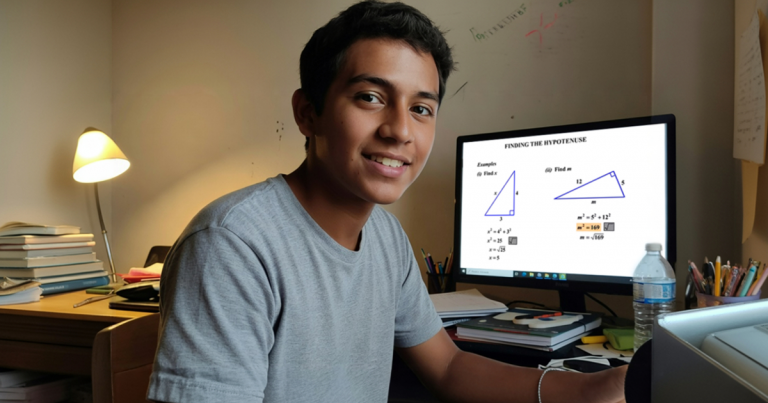
If you’ve ever looked at your child’s maths homework and thought, “Wait, what? When did they change maths? That is not the way I was taught it!” you are not alone.
Even more confronting though is when your child starts to show signs they are struggling with maths, and despite your best efforts, you’re just not sure how best to help them.
It may start with them trying to avoid their homework altogether or showing frustration or lack of confidence when they do attempt it. And later, when they are tucked up in bed asleep, you’re left with that low-level worry in the back of your mind: Are they okay with this? Am I doing enough? What if this keeps getting harder for them?
The truth is that maths can be one of those subjects where a small gap in knowledge can widen fairly quickly. When a child misses a key concept early on, everything that builds on top of that can be hard for them to get their head around. But the good news is, that just because your child is struggling with maths right now, it doesn’t mean they’ll be behind forever or that they don’t have a ‘maths brain.’ Often it just means they need a different approach, one that meets them where they are at and helps them move forward at their own pace.
The problem is that in a classroom setting, even with the best teachers, there isn’t always the time or space to pause, go back and rebuild understanding in a way that really sticks for each individual child. Some kids need a bit more time. Others need concepts explained differently. Some just need the chance to practise without the feeling of being hurried along to something else or the pressure of struggling with something that seems to come easily to their peers.
It’s at this stage that those of us who are worried that our child is falling behind in maths, but don’t feel equipped to take on the job ourselves, start looking around for extra support. Whilst traditional tutoring can be incredibly helpful, it’s not always easy to make it work in real life. The cost adds up quickly, especially if your child needs ongoing help rather than just a few sessions. Then there’s the scheduling, the rushing around after school, trying to fit one more thing into an already full week. It can start to feel like another pressure rather than a solution, particularly if the sessions fall when your child is already tired or overwhelmed.
What many parents are really looking for isn’t just ‘more maths help,’ but something that fits into family life and makes things feel easier, not harder.
That’s why more families are turning to options like MathsOnline. It’s not about replacing school or adding another rigid commitment. It’s about giving your child a way to learn that works for them, fills the missing gaps in their knowledge and restores their confidence in their abilities.
What Makes MathsOnline Different?
One of the biggest differences with Maths Online is how it breaks things down. Lessons are short, clear and designed to build understanding gradually. If something doesn’t click the first time, they can go back and revisit it without embarrassment or pressure. Kids aren’t overloaded with information — they’re guided through concepts step by step, with the chance to practise and get instant feedback along the way.
The immediate feedback is a huge benefit. Instead of practising something incorrectly over and over, they can see where they went wrong and fix it straight away. This takes the guesswork, and a lot of the frustration, out of learning.
For parents, there’s also the added bonus of being able to see how your child is progressing without having to hover over homework session. The parents’ dashboard gives you a clear snapshot of where they’re at, what they’re improving on and where they might still need support. So, you’re still involved, but you’re not carrying the whole mental load!
Plus, because it’s available anytime, it tends to fit more naturally into family routines. Some kids jump on for 15-20 minutes after school a few times a week. Others use it when they’re stuck on a specific topic. Some families build it into their weekly home life, while others keep it there as back up for when confidence dips and extra practise is needed.
The reality is, most kids aren’t “bad at maths.” They just haven’t had a chance to learn it in a way that makes sense to them yet. When they do, things can change quite quickly, and confidence can be restored.
If maths has been a sticking point in your home lately, it might be worth trying a different approach and seeing if it works for your child.
You can explore MathsOnline with a free trial and get a feel for how it fits into your routine, without any pressure to commit.
Sometimes it’s not about doing more, it’s just about finding a way that works better.

Jolene
Jolene enjoys writing, sharing and connecting with other like-minded women online – it also gives her the perfect excuse to ignore Mount-Washmore until it threatens to bury her family in an avalanche of Skylander T-shirts and Frozen Pyjama pants. (No one ever knows where the matching top is!) Likes: Reading, cooking, sketching, dancing (preferably with a Sav Blanc in one hand), social media, and sitting down on a toilet seat that one of her children hasn’t dripped, splashed or sprayed on. Dislikes: Writing pretentious crap about herself in online bio’s and refereeing arguments amongst her offspring.