“The One Question My 13 Year Old Asked Me That Stopped Me in My Tracks”
By Chris Valli
NZ Journalist, author of Put the Phone Away and Keynote Speaker of VOIC (Vulnerability Opens Inner Courage)
Sometimes, vulnerability arrives in the most unexpected conversations.
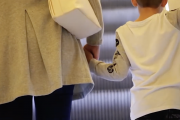
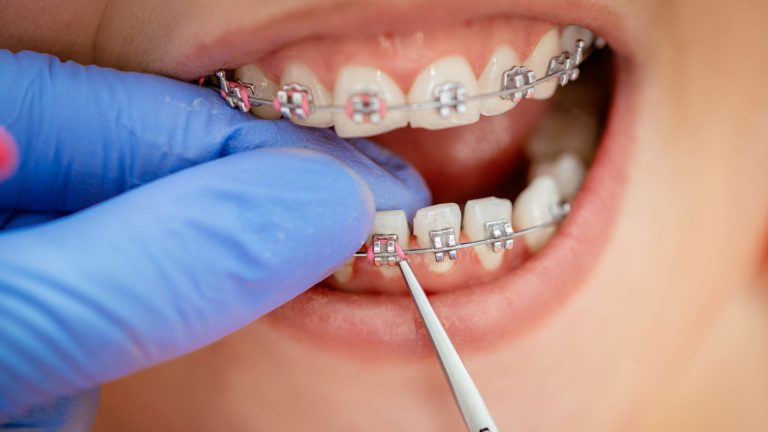
Recently, I chose not to attend my 13-year-old daughter’s orthodontist appointment. It was her week with her mum, and in my mind, stepping back felt like the amicable thing to do due to the strained relationship with my ex wife.
Then, after school, my phone buzzed. “Dad… where were you this morning?” My heart sank.
In that moment, I realised that what I thought was the right decision may have felt very different through her eyes. It wasn’t about braces. It wasn’t about custody. It was about presence.
Later, she called to tell me how the appointment had gone. We spoke about braces, self-confidence, self-worth, and how she was feeling about the changes ahead.
What amazed me wasn’t that she had those feelings. It was how confidently she could name them.
At 13, she articulated her fears, hopes and emotions with a maturity that stopped me in my tracks. She wasn’t hiding behind “I’m fine.” She wasn’t pretending to be brave. She was brave—because she was willing to be vulnerable.
As the founder of the VOIC Framework – Vulnerability Opens Inner Courage, I spend a lot of time talking about emotional literacy, courage and authentic connection.
A growing body of research suggests that vulnerability within parent-child relationships is not a weakness but a critical component of secure attachment and emotional development. Brené Brown’s research argues that vulnerability is “the birthplace of love, belonging, joy, courage, empathy, and creativity” (Daring Greatly, 2012). Rather than diminishing parental authority, moments of emotional honesty strengthen trust and deepen connection.
One of the most significant aspects of this is my daughter’s ability to identify and communicate her emotions. Brown (2019) argues that children develop emotional courage by observing emotionally available adults rather than adults who appear perfect. When parents acknowledge mistakes, express regret, and remain open to difficult conversations, they model emotional resilience rather than emotional avoidance.
The orthodontist appointment itself becomes less significant than what psychologists describe as relational presence. Developmental researchers have consistently found that children’s perception of emotional availability often carries greater long-term significance than the event itself. My daughter’s question—”Dad… where were you this morning?”—reflects a need not simply for attendance, but for reassurance that she remains emotionally important.Brown also emphasises that parents cannot expect children to embrace vulnerability if adults continually shield themselves from it. In The Gifts of Imperfection (2010), she writes that children are “hard-wired for struggle” and that our role is not to protect them from every difficult emotion but to help them develop the courage and language to navigate those emotions. Your daughter’s confidence in expressing fears about braces, self-worth and change is an example of emotional literacy in practice—a skill increasingly recognised by researchers as protective for adolescent mental health and healthy relationships.
From the perspective of attachment theory, pioneered by John Bowlby and expanded by Mary Ainsworth, this interaction also demonstrates elements of a secure attachment relationship. Secure attachment is not created by parents never making mistakes; it is strengthened through repair—the process of recognising disconnection, responding with empathy, and reconnecting. Our subsequent exemplified this process of relational repair.
Perhaps the most compelling insight from this experience is the reversal of traditional parent-child roles. Contemporary parenting research increasingly recognises that healthy families function as reciprocal learning environments. While parents guide children, children also shape parents’ emotional growth. Brown frequently argues that vulnerability is less about teaching than modelling. In this case, my daughter modelled emotional courage by expressing disappointment honestly rather than suppressing it, inviting me into a conversation that strengthened our relationship.
Ultimately, this supports what both research and lived experience suggest: emotional courage is not demonstrated by never getting parenting decisions wrong. It is demonstrated by remaining open enough to listen, humble enough to learn, and courageous enough to repair. In that sense, the most profound lesson was not about orthodontics or custody arrangements—it was about the enduring power of vulnerability to create a deeper connection between a father and his daughter.
Today, my greatest teacher wasn’t a researcher, a keynote audience or a leadership book. It was my daughter.
Sometimes, the greatest lessons don’t come from our own inner dialogue. They come from the courage of a daughter who quietly teaches her dad that vulnerability isn’t something we preach—it’s something we practise.
I’m incredibly proud of the young woman she is becoming.
And incredibly grateful that, even at 13, she’s still teaching her dad what courage really looks like.
 Chris Valli is the founder of VOIC, an organisation helping individuals, leaders and workplaces build emotionally intelligent cultures through courageous conversations. Known for his authentic storytelling and practical insights, Chris challenges traditional ideas of masculinity, leadership and vulnerability, demonstrating how emotional courage creates stronger teams, healthier relationships and more connected communities. Drawing on lived experience, research and years of facilitation, Chris delivers keynote presentations that inspire audiences to rethink trust, resilience and psychological safety. His message is simple: Vulnerability opens inner courage.
Explore other popular topics: